
If you have ever found yourself switching between two SIM cards just to figure out which one will actually load a YouTube video without buffering, you already know the frustration at the center of this comparison. MTN and Airtel are the two biggest mobile networks in Nigeria, and the debate about which one is faster has been going on for years. In 2026, with 5G now live in major cities and data prices higher than ever, the stakes are real.
This is not a comparison built on marketing claims or billboard slogans. It is based on real performance data, user reports, and network benchmarks, so you can make a decision that actually matches how and where you use your phone.
A Quick Look at Both Networks
Before diving into the numbers, it helps to understand where each network stands today.
MTN Nigeria launched commercially in 2001 and has since grown into the country’s largest telecom provider by subscribers base. It was also the first to launch 5G commercially in Nigeria in 2022, giving it a head start in infrastructure development. As of 2026, MTN’s network touches virtually every corner of the country, from dense urban hubs to rural communities where other networks simply do not reach.
Airtel Nigeria also entered the market in 2001 as well, trading under different names before settling into the Airtel brand. It is currently Nigeria’s second-largest network provider, according to Nairametrics, and has built a loyal following among urban users who value speed and competitive data pricing. Airtel launched its own 5G network in 2023, about a year after MTN, and has been aggressively expanding ever since.
Speed Test Results: The Raw Numbers
Speed is the first thing most people care about when it comes to internet, and the data from 2025 and early 2026 tells a fairly consistent story.
According to an analytical report by nPerf, a France-based mobile internet speed test platform, MTN Nigeria led the industry with an nPerf score of 37,106 points across 2025, significantly ahead of Airtel’s 25,614 points. In terms of upload speed, MTN recorded an average of 8.70 Mb/s compared to Airtel’s 4.74 Mb/s.
On latency, which measures how quickly data travels from your device to the server and back, MTN again came out ahead with an average of 96.46 millisecond (ms) versus Airtel’s 141.12 millisecond (ms). For context, lower latency means faster response times when you are gaming, making video calls, or loading interactive websites.
For browsing and streaming performance specifically, MTN led with 35.78% and 67.02% respectively, making it the stronger choice for anyone who streams video regularly or downloads large files.
That said, Airtel is not far behind. It recorded an average download speed of 10.57 Mb/s and has strong streaming performance in urban areas. Many users in Lagos, Abuja, and Port Harcourt report that Airtel actually feels faster for day-to-day browsing, partly because download speeds in cities often run higher and the network experiences less congestion in those specific locations.
5G Performance: The New Battlefield

Both networks now offer 5G service in Nigeria’s major cities, and the gap between them is becoming more apparent at this level.
MTN’s 5G network delivers average speeds of between 400 Mbps and 1 Gbps in cities like Lagos and Abuja, with consistently low latency around 15 ms. Its 5G coverage is also wider, having started its rollout earlier and already beginning to reach smaller towns outside the major urban centers.
Airtel’s 5G performance is solid in the cities where it operates, delivering average speeds between 300 Mbps and 700 Mbps in Lagos and Abuja, with latency averaging around 20 ms. It is a strong performer, particularly for students and younger users who take advantage of Airtel’s more affordable 5G bundles. However, its 5G footprint remains more concentrated in urban areas and has not expanded as broadly as MTN’s.
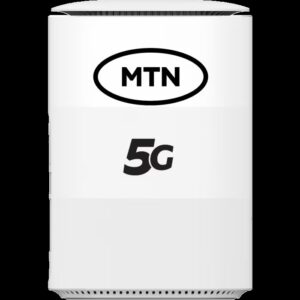
For 5G router users specifically, MTN’s router supports up to 32 simultaneous devices and offers download speeds of approximately 1.4 Gbps under ideal conditions, while Airtel’s 5G router handles up to 64 devices with speeds reaching 1 Gbps. Both routers carry identical 5000mAh batteries with roughly four hours of usage per charge.
Coverage: Where Each Network Actually Reaches
Speed numbers only matter if the network actually works where you are. This is where MTN and Airtel diverge most clearly.
MTN has the deepest network penetration in Nigeria. It is consistently reliable not just in Lagos and Abuja, but in semi-urban towns and rural communities where Airtel’s signal either weakens or disappears entirely. If you travel frequently between states or work in locations outside major cities, this matters a great deal. MTN’s infrastructure investment over more than two decades means you are far less likely to find yourself with no service.
Airtel’s coverage is strong in urban and growing cities. In places like Lagos Island, Victoria Island, Ikeja, Wuse, Maitama, and Port Harcourt’s GRA areas, Airtel’s 4G LTE network is very stable and often rivals MTN in everyday performance. The challenge appears when you move beyond those centers. Airtel’s signal in semi-urban and rural areas tends to be less consistent, and its 5G footprint remains concentrated in a handful of major cities.
The practical takeaway: if your work or lifestyle keeps you mostly in cities, Airtel can comfortably handle your needs. If you move around a lot, traveling for business, visiting family in smaller towns, or living outside the major urban corridors, MTN is the safer bet.
Which Network Is Best in Your State?
Rather than a single national verdict, here is how both networks generally perform by region:
Lagos
Both networks are strong here. Airtel often has an edge in densely built-up areas for day-to-day browsing speed. MTN holds steadier during peak hours when network congestion increases. For 5G specifically, MTN has wider Lagos coverage, but Airtel’s urban 5G performance is competitive. Either works well for most users, but power users and remote workers may prefer MTN for its stability under load.
Abuja (FCT)
Both networks perform well across the Federal Capital Territory. MTN is strong in the main districts, while Airtel’s performance in Abuja is among its best nationally. For students and young professionals in Abuja, Airtel’s flexible bundle pricing makes it attractive. For enterprise users and those who travel into surrounding states regularly, MTN is the more reliable option.
Port Harcourt and Rivers State
MTN maintains strong coverage across Rivers State including more remote areas. Airtel performs well within Port Harcourt city but weakens as you move further out. If your work takes you into the Niger Delta communities or oil field areas, MTN is noticeably more reliable.
Kano and the Northern States
MTN has significantly stronger coverage across the northern states, including Kano, Kaduna, Katsina, and Sokoto. Airtel has urban presence in Kano but coverage drops considerably in smaller northern towns and rural areas. For anyone living or working outside the major northern cities, MTN is the clear choice.
Enugu and the South-East
MTN is well established across Enugu, Anambra, Imo, and Abia states, including smaller commercial towns. Airtel performs decently in urban Enugu but is less consistent in the surrounding local government areas. Again, MTN’s wider infrastructure gives it the advantage here for users who move between the city and smaller communities.
Ibadan and Oyo State
Both networks cover Ibadan reasonably well. MTN maintains better signal quality in the outskirts and surrounding towns. Airtel tends to work well within the busy commercial parts of the city.
Data Plans and Value in 2026
Speed is not the only factor people consider, data cost per gigabyte matters just as much, especially with current economic pressures.
MTN’s plans are generally priced at a slight premium. Monthly bundles for 2026 range from around 6GB for approximately N3,500 up to 100GB for around N20,000, with unlimited capped plans starting at N25,000 targeting heavy users. MTN’s pricing reflects its “quality over quantity” brand positioning, and it frequently offers personalized deals through its MTN4ME platform that can reduce the effective cost for regular subscribers.
Airtel tends to offer more data volume for comparable pricing, making it a stronger value proposition for heavy users who stay mostly in cities. Its Binge plans and weekly bundles remain popular, particularly among students and young professionals managing weekly budgets. Airtel also frequently includes bonuses on new purchases and first-time activations that make the upfront cost more attractive.
Both networks raised tariffs in 2025 in response to inflation and currency pressures, so neither is significantly cheaper than it was a year ago. The gap between them has narrowed from a pricing standpoint, making speed and coverage more decisive factors than cost alone for most users.
Network Reliability During Peak Hours
One area where real-world experience diverges from raw speed benchmarks is peak hour performance. Both networks experience congestion during busy periods, typically evenings from around 7 PM to 10 PM when millions of Nigerians are streaming, calling, and browsing simultaneously.
MTN handles peak-hour congestion better than Airtel in most locations, delivering steadier speeds when the network is under heavy load. Airtel users, particularly in densely populated areas, sometimes report noticeable slowdowns during these periods. This does not mean Airtel is unreliable, but if you do a lot of heavy usage in the evenings, it is worth keeping in mind.
So Which Network Should You Choose?
Based on everything above, here is how to decide:
Choose MTN if: you travel frequently between states, live or work outside a major city, need the most reliable option during peak hours, require strong 5G coverage, or run a business that depends on consistent connectivity. MTN’s infrastructure advantage is real and measurable, and it justifies the slight price premium for users where reliability is non-negotiable.
Choose Airtel if: you live and work mostly within a major city, want competitive data volume for a lower effective price, are a student or freelancer who values flexible short-term bundles, or primarily need fast browsing and streaming for personal use. Airtel’s urban performance is genuinely strong, and for city-based users it often delivers excellent day-to-day speed at a better price point.
The smartest move: Use both. Nigeria’s dual-SIM phones exist for exactly this reason. Pair an MTN SIM for reliability and coverage with an Airtel SIM for affordable data in the city. This strategy is already common among Nigerian power users, and it genuinely gives you the best of both networks without compromising either.
The Winner
In 2026, MTN remains Nigeria’s fastest and most widely covered mobile network by the numbers. Its 5G infrastructure, upload speeds, latency, and rural coverage are all ahead of Airtel’s on a national level. For users who prioritize raw performance and the ability to stay connected anywhere in the country, MTN is the stronger choice.
However, Airtel is not simply a second-best option. In Nigeria’s major cities, it is a genuinely competitive network that offers fast speeds, solid streaming performance, and data plans that often provide better value per gigabyte. For urban users who rarely leave the city, Airtel deserves serious consideration.
At the end of the day, no single network is perfect for everyone. Your location, your budget, and how you use your data will determine which one actually serves you better. Test both if you can, check coverage in your specific area, and do not rely on brand loyalty alone, your connectivity is too important for that.
For real-time speed tests in your area, you can use tools like Speedtest by Ookla or nPerf to compare both networks side by side on your own device.